Mostrar mensagens com a etiqueta 1956. Mostrar todas as mensagens

quinta-feira, 22 de janeiro de 2026

Maxicard Old Town Hall, Leipzig

 Maximum card Yt: DD 231; DDR 15 Pf Old Town Hall Leipzig stamp (1955); commemorative postmark “Leipzig Messe” dated 08‑03‑1956; monochrome postcard of the Altes Rathaus (Graphokopie).

Yt:DD 231

Stamp: Germany – Deutsche Demokratische Republik (DDR) – Commemorative series “Recovered Historic Buildings – Old Town Hall, Leipzig”, 15 Pf, violet, depicting the Altes Rathaus (Old Town Hall), a landmark Renaissance building in the historical centre of Leipzig. (Issue: 14.11.1955)

Postmark: Germany – Commemorative illustrated postmark “LEIPZIG – LEIPZIGER MESSE” – 08.03.1956. Special cancellation showing a stylised representation of the Old Town Hall of Leipzig, corresponding precisely to the architectural subject depicted on the stamp and on the postcard. The presence of the illustration identifies it clearly as a commemorative or special postmark, not a standard circular date stamp.

Postcard: Monochrome photographic illustration depicting the Altes Rathaus (Old Town Hall) in Leipzig, presented in a frontal panoramic view that emphasises the length of the Renaissance façade, the arcaded ground floor and the central tower with its characteristic cupola. The image reflects the documentary architectural style typical of mid‑20th‑century German publishers. (Edition: Graphokopie)

Concordance:

Thematic: The thematic concordance is outstanding, as the stamp depicts the Old Town Hall of Leipzig, the postcard presents a photographic view of the same building, and the commemorative illustrated postmark features the identical architectural subject. Together, these three elements align perfectly around the same landmark, forming a triple concordance fully compliant with maximaphily standards.
Geographic: All elements — stamp, commemorative illustrated postmark and postcard illustration — are directly linked to Leipzig, the exact locality represented. The “LEIPZIG – LEIPZIGER MESSE” special cancellation reinforces geographic authenticity, entirely in accordance with FIP maximaphily criteria.
Temporal: The postmark date (08.03.1956) falls well within the valid postal usage period of the 1955 issue, ensuring proper temporal concordance for a maximum card produced with a commemorative stamp circulating over multiple years.

domingo, 18 de janeiro de 2026

Postal máximo não oficial Câmara Municipal de Subotica (Gradska Kuća)


Jugoslávia (Sérvia) – Selo Fiscal Municipal de Subotica
  • Emissão: c. 1945–1950.
  • Tipo: Taxa Municipal (Gradska Taksena Marka).
  • Valor Facial: 10 Dinares (10 Dinara).
  • Motivo: Vista da Câmara Municipal de Subotica (Gradska Kuća), um marco da arquitetura Arte Nova (Secessão Húngara) construído entre 1908 e 1912.
  • Catálogo de Referência: Barefoot (Série Yugoslavia Revenues).
Nota Histórica: Este selo não tinha finalidade postal; era utilizado para o pagamento de taxas administrativas locais no município de Subotica logo após a Segunda Guerra Mundial. O desenho destaca a torre de 76 metros do edifício camarário, símbolo da identidade cultural e política da região de Vojvodina.

A análise deste postal de acordo com as normas da FIP (Fédération Internationale de Philatélie) revela que, apesar de ser uma peça visualmente apelativa e com excelente concordância, ele não é considerado um "Máximo Postal" oficial para fins de competição em Maximafilia.
Análise de acordo com os regulamentos da FIP:
1. O Selo (Concordância de Motivo)
  • Análise: O selo retrata fielmente o edifício da Câmara Municipal de Subotica (Gradska Kuća), o mesmo que aparece no cartão-postal.
  • Norma FIP: A FIP exige o uso de selos postais emitidos por uma autoridade postal nacional.
  • Veredito: Como este é um selo fiscal (receita) municipal e não um selo postal, ele é explicitamente proibido na classe de Maximafilia (Artigo 3.1 das diretrizes FIP).
2. O Cartão-Postal (Suporte)
  • Análise: O cartão é retangular e de época, mostrando o edifício em grande plano.
  • Norma FIP: O cartão deve ter formato retangular ou quadrado e a imagem deve ocupar pelo menos 75% da sua superfície.
  • Veredito: O postal em si cumpre as normas de formato e época, sendo um suporte adequado para um máximo postal se o selo fosse postal.
3. O Carimbo (Concordância de Lugar e Tempo)
  • Análise: O carimbo é de Subotica, datado de 31.VIII.1950 (ou similar), o que coincide com a localidade do edifício e o período de circulação do selo.
  • Norma FIP: Deve haver concordância de lugar (o carimbo deve ser da localidade ligada ao motivo do selo).
  • Veredito: O carimbo possui uma excelente concordância de lugar e está aplicado sobre o selo no anverso, o que é a técnica correta.
Conclusão para Colecionismo
Embora inválido para a Classe de Maximafilia devido à natureza fiscal do selo, esta peça tem elevado valor em outras classes de competição:
  • Filatelia Fiscal (Revenue Philately): Seria uma peça de destaque, demonstrando o uso correto de um selo municipal num documento ou suporte de época.
  • Filatelia Temática: Pode ser aceite em casos excecionais se for o único meio de descrever um ponto temático importante sobre a cidade de Subotica.

quinta-feira, 15 de janeiro de 2026

Maximum card Councillor Jaume Bonell, Lake Engolasters - Andorre


Yt:AD-FR 115

Stamp: Andorra (French Administration) – Vieux Conseiller Andorran (Old Andorran Councillor) – 20f, blue and black, depicting a traditional Andorran elder in mountain attire against a Pyrenean backdrop (Issue: 1956).

Postmark: Andorre – XXV Anniversaire de la Poste Française, commemorative pictorial cancellation featuring the portrait of Jaume Bonell – 1956.

Postcard: Monochrome sepia‑toned postcard depicting the traditionally dressed Andorran elder Jaume Bonell standing before a mountainous landscape; printed caption at the lower margin reads “Principauté d’Andorre – Vieux Conseiller Andorran” (Edition unknown).

Concordance:

– Thematic: The stamp portrays an Andorran elder in traditional rural attire, and the postcard depicts the same historical figure, Jaume Bonell, in an identical cultural and geographical context. This creates perfect thematic alignment through the exact matching of subject and setting.

– Geographic: The commemorative cancellation from Andorre corresponds directly with both the issuing authority of the stamp (Andorra – French Administration) and the Andorran landscape featured on the postcard, ensuring full geographic coherence.

– Temporal: The 1956 cancellation corresponds precisely to the year of issue of the 20f “Vieux Conseiller Andorran” stamp, providing excellent temporal coherence within maximaphilic standards.

quarta-feira, 14 de janeiro de 2026

Maxicard Jacob Christian Jacobsen


Stamp: Denmark, Commemorative – 60th Anniversary of the Death of I.C. Jacobsen – 20 øre, brownish‑red (Issue: 10.11.1947) [stampworld.com]
Postmark: København (Copenhagen), Circular Date Stamp – 03.12.1956 
Postcard: Sepia-toned photographic portrait of a well-dressed man in formal attire, standing outdoors beside architectural elements such as a column and foliage; the pose conveys a dignified, period‑appropriate setting (Edition: not identifiable from the image).

Concordance:
– Thematic: The stamp honors I.C. Jacobsen, a prominent cultural and industrial figure in Denmark, while the postcard presents a formal, period portrait that stylistically aligns with the era and atmosphere associated with Jacobsen’s lifetime and milieu.
– Geographic: The cancellation originates from Copenhagen, the principal city associated with Jacobsen’s historical and institutional legacy, aligning with the national cultural context represented by the commemorative stamp.
– Temporal: The postmark date of 1956 falls within the valid postal period of the 1947 I.C. Jacobsen commemorative stamp, fulfilling the temporal requirement for maximaphilic coherence.

YT: 314

domingo, 14 de dezembro de 2025

Maximum Card New York - Downtown Manhattan Skyline (1956)


Country: USA

Issue: Air Mail – Statue of Liberty and New York Skyline – 15¢
Date of Issue: Aug 20, 1947

Postmark: Duplex Cancel (with Shoe-Print Killer) – NEW YORK, N.Y. – G.P.O. (General Post Office) – MAY 17, 1956 – 8 PM

Postcard: Color illustration of the downtown Manhattan skyline as seen from Staten Island Ferry, featuring prominent skyscrapers and waterfront structures. In the foreground, a ferry boat navigates near the piers, while the background showcases iconic Art Deco towers and office buildings, emphasizing New York City’s architectural grandeur of the mid-20th century. Caption at the top reads: “DOWNTOWN SKYLINE FROM STATEN ISLAND FERRY – NEW YORK CITY.” (Edition Colourpicture)

Justification of Maximum Concordance:
Excellent thematic and geographic concordance. The stamp depicts the Statue of Liberty and the New York skyline, symbolizing the city’s role as a gateway to America, while the postcard illustrates the same urban theme with a detailed view of Manhattan’s skyline from the harbor. The cancellation from New York City’s General Post Office nine years after the issue — it remains within the valid postal period for the stamp, ensuring acceptable temporal concordance for a historical maximum card.

Yvert & Tellier: US PA37

sexta-feira, 25 de julho de 2025

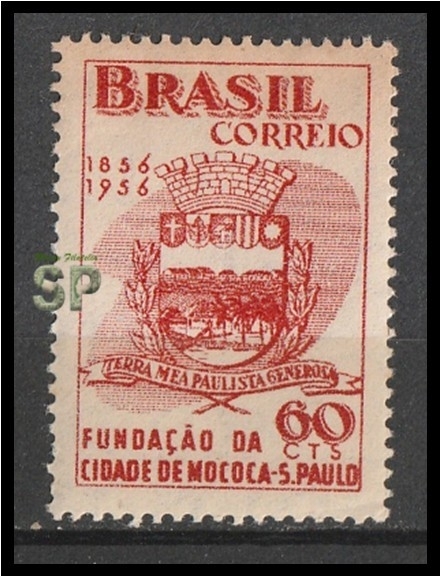
Ficha Técnica Filatélica – Selo Comemorativo Centenário da fundação da cidade de Mococa - São Paulo (1856–1956)


O selo emitido em 1956 celebra o centenário da fundação da cidade de Mococa, localizada no interior do estado de São Paulo, Brasil. Fundada em 1856, Mococa desenvolveu-se a partir da expansão cafeeira e da formação de fazendas no oeste paulista, tornando-se um importante polo agrícola e cultural da região. O selo apresenta o brasão de armas da cidade, com o lema “Terra Mea Paulista Generosa”, refletindo o orgulho local e a generosidade de seu povo. A emissão, de valor facial de 60 centavos, integra a série de selos comemorativos brasileiros que homenageiam marcos históricos e culturais. A escolha do brasão como elemento central reforça a identidade municipal e o vínculo com as tradições paulistas. Este selo é um testemunho visual da memória coletiva e da valorização das raízes históricas do Brasil, sendo uma peça relevante para colecionadores temáticos e estudiosos da história postal nacional.

🧾 Ficha Técnica Filatélica – Selo Comemorativo de Mococa (1956)

1. Identificação Geral

  • País emissor: Brasil
  • Ano de emissão: 1956
  • Motivo da emissão: Centenário da fundação da cidade de Mococa - São Paulo (1856–1956)
  • Valor facial: 60 centavos (60 CTS)
  • Inscrição principal: “BRASIL CORREIO”
  • Legenda comemorativa: “FUNDAÇÃO DA CIDADE DE MOCOCA - S. PAULO”
  • Lema no brasão: “TERRA MEA PAULISTA GENEROSA”

2. Descrição Visual

  • Cores predominantes: Vermelho
  • Imagem central: Brasão de armas da cidade de Mococa
  • Elementos gráficos adicionais: Datas “1856” e “1956” à esquerda do brasão

3. Critérios FIP

  • a) Condição (Condition)
    • Estado físico: Excelente (sem danos visíveis, dobras ou manchas)
    • Posição: Boa (imagem e margens bem proporcionadas)
  • b) Qualidade de Impressão (Quality)
    • Impressão: Clara e bem definida
    • Preservação da cor: Ótima, sem desbotamento aparente
  • c) Importância Filatélica (Philatelic Importance)
    • Tipo de emissão: Comemorativa
    • Relevância histórica: Celebra o centenário de uma cidade paulista, com valor cultural e regional
  • d) Raridade (Rarity)
    • Tiragem: 5.000.000
    • Disponibilidade no mercado: Comum a moderadamente escasso (estimativa)
  • e) Apresentação (Presentation)
    • Design: Simétrico, com boa organização visual
    • Legibilidade: Alta
  • f) Conhecimento e Pesquisa (Knowledge and Research)
    • Contextualização: Pode ser integrado em coleções temáticas sobre:
      • História das cidades brasileiras
      • Brasões municipais
      • Emissões comemorativas do Brasil


quinta-feira, 21 de maio de 2020

Livro 1956 Historiadores do Portugal Antigo Colecção Educativa DGEP LXI série G n.º 4 Direção Geral Ensino Primário

https://www.delcampe.net/en_GB/collectables/books-magazines-comics/school-3/1956-historiadores-do-portugal-antigo-coleccao-educativa-dgep-lxi-serie-g-n-4-direcao-geral-ensino-primario-1003086910.html

Título: Historiadores do Portugal Antigo
Autor: Maria de Lurdes Belchior Pontes

Edição: Plano de Educação Popular - Campanha Nacional de Educação de Adultos

Coleção: Colecção Educativa
Ano Publicação: 1956  - Série E - número 4

Impressão: Editora Gráfica Portuguesa
Encadernação: Capa mole;  lombada - 14 mm;  Dimensão: 164 mm x 112 mm.

Ilustração: José Ruy

Peso: 115 gramas